
Tatango started as a college dorm-room idea in 2007 and sold to private equity in 2025. Here's how those 18 years actually unfolded.
The idea
In January 2007, halfway through my second run at college (this time at the University of Houston, in their entrepreneurship program), I was talking to a friend who managed her sorority. She was venting. Her members didn't read her emails, didn't show up on time, didn't know what was happening in the chapter.
This was pre-iPhone. To check email you had to be sitting at a computer, and most college students during the day weren't. But they all had cell phones.
The idea arrived in a single thought. What if she could text every member at once? Group texting barely existed. Mass texting was unheard of. If one sorority leader could send a single message to a hundred members and have it land in everyone's pocket within seconds, her problem disappeared.
That night I called my childhood friend Matt Pelo, who was at San Diego State in a fraternity, and asked if he was seeing the same problem on his side. He was. By the end of that phone call, we'd decided there was a company in the thought.
Starting NetworkText
In February 2007, Matt and I each put $2,500 into a bank account and called ourselves a company. He was in San Diego. I was in Houston. We split equity 50/50 and started building what we called NetworkText, a text messaging platform for fraternities and sororities.
A few weeks later, Matt flew to Houston and set up an air mattress in the living room of my one-bedroom apartment. We had a few desks, a whiteboard, and a problem to solve. We spent every waking minute building, with breaks only for lunch, dinner, and the occasional reprieve in the living room where the air mattress lived.
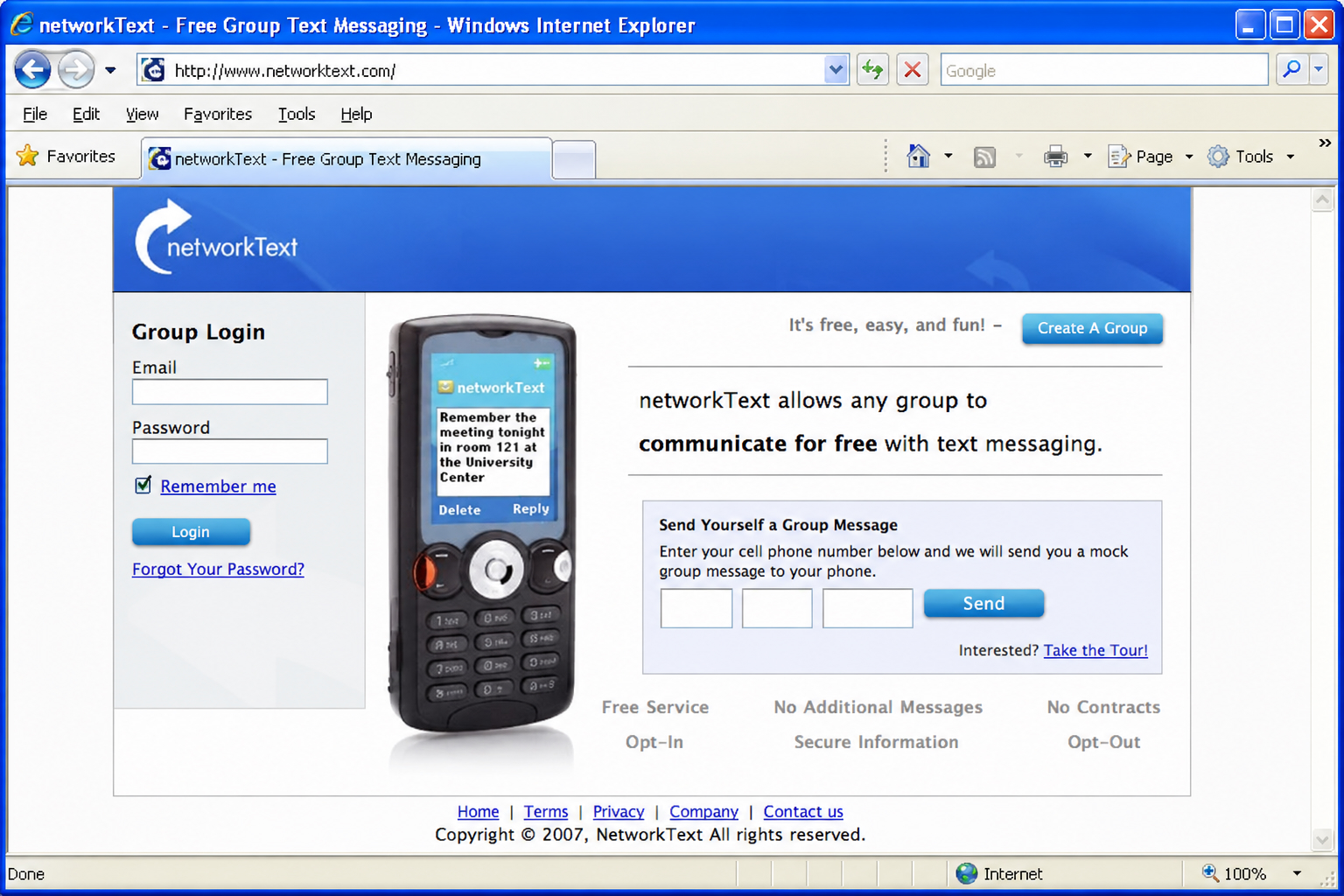
Neither of us was technical, and 2007 was a decade before anyone said "no-code" or "vibe coding." So we used most of our capital to hire a development shop in Brazil through Upwork to build the MVP. The NetworkText website launched in September 2007.
On March 1, my dad Simon and Matt's dad Rich each invested $7,500 in the company. $15,000 total, six percent of the equity, valuing the business at $250,000. In April, I submitted the business plan to the University of Houston's entrepreneurship program.
By the end of the year, Matt and I had both dropped out of college and moved back to our hometown of Bellingham, Washington. Matt moved in with his parents. I moved in with mine. We commandeered my parents' basement as our official office. The best perk of that setup: my mother had recently finished culinary school and made us lunch every day. Our favorite was the grilled paninis.
Matt's exit
In November 2007, eight months in, Matt told me he didn't want to keep building. He wanted to go back to school, finish his degree, and step away from the day-to-day. But he wanted to keep his equity. After our dads' investment, that was 47 percent of the company.
We had completely different mental models of the original deal. I thought we'd traded $2,500 plus full-time effort for the foreseeable future and the cost of dropping out, all of it together, for our equity. Matt thought the money alone bought the stake. Neither of us was lying. We had actually written it down. The clause was there, buried in the company's bylaws, but we were first-time entrepreneurs and neither of us had read what we'd signed.
For a few days the company was a standstill. Matt's plan was to go back to school for the next four years. My plan was to keep building. Both of us would keep our equity. Every hour I worked, the company would grow, and Matt's stake would grow with it, even though he wouldn't be in the building. We came close to just shutting the whole thing down.
The way out, when I finally found it, was a single clause in the operating agreement: if a manager or officer stopped doing their job, the company had the option to buy back their interest at the most recent funding valuation. The math worked out to $152,344, payable over 15 annual installments at 6 percent interest.
The trouble was that I had a few hundred dollars in my bank account, and the company had even less after paying the Brazilian development shop. There was no way to write Matt a check. The only way to do it was the 15-year note. He agreed. The papers were signed on November 30, 2007. It took us 11 years to pay off, with a lot of interest along the way.
From that day forward, I was the sole founder. The whole thing was resting on me.
● Lesson LearnedFounder Vesting is CriticalHow a Missing Founder Vesting Agreement Cost Us 11 Years and Over $100K in InterestRead the essay →Raising capital
Once Matt's buyout was structured, the more urgent problem became cash. The Brazilian development bill had drained what little we had, and the company needed to keep building.
Late 2007 was a hard moment to be raising money for a software company. Angel investing as a category barely existed yet. Friends-and-family checks for startups weren't a normal thing the way they are now. We weren't just pitching the business. We were pitching the entire concept of putting money into an early-stage company at all.
The one tailwind we had was that Facebook was suddenly part of the cultural conversation. Everyone had read about a college dorm-room idea turning into a real company with real value, and there was a freshly minted FOMO around missing the next one. We rode that wave for everything it was worth.
We met with more than 50 people. Family friends. Doctors. Dentists. Local business owners. Anyone who might have a few thousand dollars to spare. The minimum check was $5,000. We didn't know what an accredited investor was. We were taking any check we could get.
You can view the original pitch deck here.
The check that nearly didn't get cashed came from a local businessman, a family friend. He wrote us $20,000, more than the combined investment from our two fathers. I hadn't realized the amount until I looked at the check. I showed my mother. She and my father then had a heated debate, in front of me, about whether I should accept it or give it back. Twenty thousand dollars, for her son's cockamamie internet idea, struck her as a ridiculous amount of money to take from a friend. Eventually I convinced her we should keep it. He became one of our largest individual shareholders.
Years later, that same investor was diagnosed with a terminal illness. Before he died, we were able to run a secondary offering on his shares and return $200,000 to his family. That, for me, remains one of the proudest moments of the company.
The friends-and-family round closed at about $115,000 from 10 investors, valuing the company at roughly $1 million. The next May, we applied to the Bellingham Angel Group, a local group of accredited investors who invested in startups. When I presented, I was the youngest founder ever to pitch them. Seven of them invested, most in the $10,000 to $25,000 range. One investor, who really believed in us, put in close to $200,000 by himself. The round closed at roughly $300,000 at a valuation of about $6 million. I did not show my mother that check.
In November 2008, we did two things at once. We changed the company's name, and we changed the company itself.
The name first. NetworkText became Tatango, Inc. Every shareholder rolled into the new entity. The name was easier to say, harder to misspell, and broader than fraternities and sororities. We were already starting to push beyond campus.
There's no great origin story for "Tatango." We locked ourselves in a conference room for a full day and threw names at the whiteboard until something sounded right. The only hard requirement was that the domain be available. We liked "tango." Someone stuck a "Ta" on the front of it. Tatango. The domain was open, we'd burned a whole day, and that was good enough. We went with it.
The reason we wanted off "NetworkText" was that we thought the word "text" might box us in. At the time we were looking at voice calls, voicemail drops, and pushing messages out to Facebook and Twitter. The idea was that a single message a customer wrote would go out as a text, a voicemail, and a social post, all at once. We didn't want a name tied to one channel. In hindsight that was pretty stupid, because we eventually did the opposite. We cut everything and focused entirely on text messaging. But I still think Tatango is a lot more fun to say than NetworkText, so the rename earned its keep anyway.
The bigger change was structural. We'd set the company up as an LLC, which was a mistake. This was before Y Combinator had incorporation templates and before "you should be a C corp" was common knowledge for first-time founders. We didn't know any better. An LLC is fine for a small business with a couple of owners. It's the wrong vehicle for a company raising from a growing list of investors and issuing different classes of stock. So alongside the rename, we converted from the LLC to a Washington C corporation. That's what let us issue the preferred stock our angels and later investors bought.
In February 2009, we closed what we called our Series A. $350,000 at 58 cents a share, valuing the company at about $8 million. The investors were our existing friends and family and angels. We never went the venture capital route, and that round was the last outside capital Tatango would ever raise. (Today, calling a $350,000 round a "Series A" feels quaint. Series A's are now measured in tens of millions of dollars. Ours was thirty-five hundred grand from people who already knew us.)
On paper, we looked like a venture-backed startup. In reality, our 2008 revenue was $2,961. Total. For the year.
The original business model
The model we'd pitched to the Bellingham Angel Group was simple and elegant. For every text message sent on the platform, we'd attach a small ad to the bottom of it and get paid one to two cents per message by our ad partner. The more messages our customers sent, the more money we made. Our customers paid nothing to send. Everyone was happy.
The partner was 4INFO, a well-funded mobile media company led by Zaw Thet that already had advertiser relationships. They handled the ads. They also delivered the texts on their own infrastructure, then wrote us a check for each ad placement.
It worked beautifully. For a while.
Eventually it became clear that 4INFO had been filling our ad inventory with their own house ads, promotional placements rather than paid ones, and the arrangement quietly ran out of road. The checks stopped. Suddenly we were paying roughly a penny per message ourselves with no ad revenue to offset it, and we were serving a customer base that had been promised the service for free.
We pivoted to what looked, in retrospect, like the right business model all along: a monthly SaaS fee. It was a harder sale. It was a real business.
The early years
Revenue inched up.
2009 - $161,000
2010 - $303,000
2011 - $231,000
We weren't broken, but we weren't growing either. We were spending most of our energy trying to figure out who, exactly, we were selling to. We'd expanded from fraternities and sororities to general campus organizations, then off-campus to any group or club that needed to communicate with its members. None of it had really clicked.
The first acquisition offer arrived in February 2012. Vocus, a publicly traded marketing-software company, sent a letter of intent to buy Tatango's assets for $2 million in cash, about nine times our prior year's revenue. The number was lower than our most recent funding valuation, but with the preference stack the way it sat, our investors would have gotten their money back plus a little. The team would have walked into cushy roles at a much larger company. Looking back, the structure was a classic acquirer playbook. Discount the company on paper, but make the founders and the team whole by offering high-paying jobs and titles, so the people who can object are the people most incentivized to say yes.
The deal got very close to closing. What killed it had nothing to do with us. Right before they were set to acquire Tatango, Vocus closed another deal, an acquisition of iContact, a company run by my friend Ryan Allis. The market reacted badly. Vocus's stock fell sharply, and the company suddenly had neither the currency nor the appetite to follow through. Our deal died on someone else's bad news.
Revenue crossed seven figures in 2013 and stayed roughly flat through 2014, around $1.2 million. That September, another suitor arrived. Waterfall International, a competitor in the SMS marketing space. The offer was again $2 million, but the structure was where it got interesting. Half cash up front, half cash in a year.
One of our investors read the fine print closely and flagged the dangerous clause: if the buyer defaulted on the second payment, the obligation would convert into common shares of the acquirer at the acquirer's then-current valuation. He read this as a tell. The buyer, he thought, was planning to default. They'd give us paper instead of cash.
To test his theory, we went back to the buyer with a question: if you're not going to default, then offering us two or three times the value of that second payment in shares should be no problem, right? They balked. We had our answer.
We called the deal off. The next day they hired our CTO out from under us. That triggered a cease-and-desist letter and eventually a settlement to release him from his employment contract and non-competes. Just as importantly, it confirmed for us what kind of people we'd almost done business with.
Two near-exits in three years, both of them survived only because we paid attention to the structure rather than the headline number. Looking back, I was lucky on both counts.
● Lesson LearnedWhy Entrepreneurs Should Value Their Earnout at ZeroWhy you should value every deal at the cash up front—and ignore the rest.Read the essay →The political pivot
In 2015, revenue actually dropped, to $958,000. We were burning out on the SMB market. Restaurants and retail businesses sending one or two messages a week to a few hundred loyal customers, paying us per message. It worked, but it was a grind, and the unit economics were what they were.
The turn came in 2016, in a meeting I didn't think much of at the time.
A U.S. senator's campaign reached out wanting to use our platform to text his supporters. We told them the same thing we told everyone: as long as you follow the opt-in rules and get consent from your audience, you can use Tatango. It didn't feel materially different from sending a coupon for a burger. An ask for a donation was an ask for a donation. We said yes. The senator was Scott Brown.
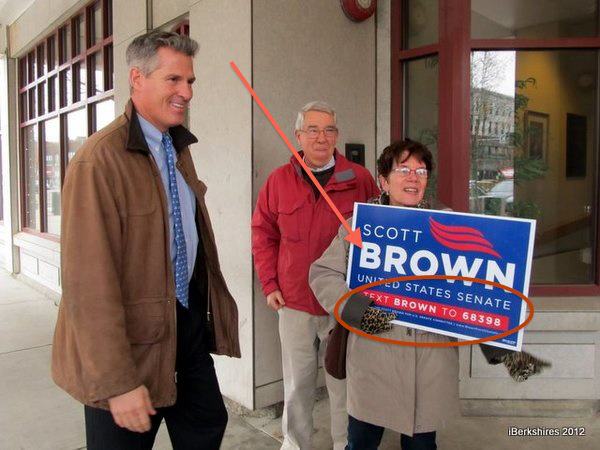
What we didn't appreciate, until it was happening, was the difference in scale and frequency. A restaurant might send one or two texts a week to 500 customers. A political campaign sent multiple messages a day to tens of thousands of supporters. We charged per message. The math worked very, very quickly.
We pivoted hard. By 2017, political campaigns and advocacy groups were our focus. Revenue followed. $2.5 million in 2016. $2.3 million in 2017. $4.3 million in 2018. $8.65 million in 2019. The product had finally found its market. The infrastructure could handle the volume. The team was growing. Tatango had become, finally, a real company.
It was the calm before something nobody saw coming.
The Airship deal
In late 2019, we signed a term sheet to merge with Airship, a Portland-based mobile engagement company. By March 23, 2020, a fully negotiated merger agreement was sitting on my desk, valuing the combined deal at $25 million.
Two weeks later, the world locked down for COVID-19. The buyer's financing fell through in the uncertainty. The deal died with it. At the time it felt catastrophic. The closest we'd come to an exit, undone by something that had nothing to do with the business itself. The document went into a drawer.
Within months, that drawer would look like the best thing that ever happened to me.
2020
In 2020, our revenue went from $8.65 million to $50.9 million.
The 2020 election cycle hit Tatango like a freight train. Political organizing, fundraising, voter mobilization. All of it ran on text messages, and we were one of the few platforms built to handle the volume. The product was already built. The infrastructure already worked. The team already knew how to onboard high-volume customers. We'd been preparing for this moment for 13 years without knowing it.
● Lesson LearnedDrill Baby Drill: The Boring Secret to Scaling a BusinessStop chasing shiny objects—double down on what’s already working and watch your results multiply.Read the essay →The company was extraordinarily profitable through the spike. After 13 years of building, the early investors who'd backed the idea when it was just an idea were about to get real money out for the first time. So was I.
For the first time, the company looked like the company we'd been trying to build all along.
Consolidating the cap table
The cleanup had started years earlier.
In January 2013, my father Simon bought out Rich Pelo, Matt's dad, every share he held. Matt had been gone from the company for over five years by then, and Rich wanted out. I was still in the building every day, so it made sense for my father to be the one to buy. It felt fair to everyone at the time. It also turned out to be the first move in a process that would run for the next dozen years: getting the cap table down to the people who actually wanted to be there.
The next move came in 2020. One of our shareholders made a tender offer to the others and bought out eight of them at once. Shares that had been spread across a long tail of early investors started collecting in fewer hands.
Then the company itself started buying. Late in 2020, flush from the election year, we ran our first company stock buyback. We made a tender offer off the balance sheet and repurchased about $2 million worth of shares. We did it again in August 2021, about $1 million. And again in November 2024, about $4 million.
The mechanic is worth understanding, because most founders never think about it. When the company buys shares back, those shares don't go to a new owner. They get retired. They come off the cap table entirely. Every remaining shareholder's percentage of the company goes up without them spending a dime. The buybacks gave liquidity to the people who wanted out, and they quietly increased the ownership of everyone who stayed, including me.
I didn't fully appreciate it at the time, but a clean, consolidated cap table is one of the things that makes a company sellable. A dozen years of buying shares back, one tranche at a time, was quietly building the conditions for the deal that would eventually close on Halloween 2025.
Stepping back
Here's the number that captures the shape of the problem. By the end of 2020, we were running a $50 million business with about a dozen employees.
The growth had outrun me. I'm a zero-to-one entrepreneur, not a professional operator, and the gap was getting harder to ignore. In December 2020, I hired Kevin Fitzgerald as Chief Revenue Officer. He immediately started absorbing the operational machinery I'd been holding together with sheer hustle. By July 2021, his role had expanded to Chief Operating Officer. He built out a real management team, hired aggressively across every function, and we went from 12 people to about 75 in the course of a year and a half.
It worked so well that by April 2022, I made the call to step away from the top job entirely. Kevin became CEO. I stayed on as Chairman. Tatango had gone from a very profitable dumpster fire to a very profitable, very well-run business. Kevin ran it from then until the end.
● Lesson LearnedStep Aside and Let Someone Better LeadWhy Letting Go Could Be the Best Move You Ever MakeRead the essay →Pivoting to nonprofit
In late 2022, the board took a hard look at the shape of Tatango's revenue and didn't love what it saw.
The 2020 wave had receded, as it was always going to. Revenue settled to $32 million in 2021 and $27 million in 2022, with the underlying customer base almost entirely political. Political revenue is violent revenue. It comes in waves, peaks in election years, and collapses in odd years. And by the nature of how campaigns work, political customers don't sign multi-year contracts. They can't. They don't know if they'll be in business next month.
The decision we made was to pivot the company. Same product, different customers. Instead of campaign donors, nonprofit donors. Instead of political fundraising, charitable fundraising. The mechanics of an SMS donation ask are identical whether the cause is a campaign or a children's hospital, and the nonprofits we targeted (humane societies, hospitals, food banks, advocacy organizations) ran year-round programs with real budgets and real contracts.
The transition was painful on the top line. Revenue dropped to $11 million in 2023, the lowest it had been since 2017. But the revenue that remained was contractual. Recurring. One- and two-year deals from organizations whose missions didn't go on hiatus between November and the following November. The quality of a dollar of nonprofit revenue was significantly higher than a dollar of political revenue.
Revenue rebounded to $23 million in 2024. By the middle of 2025, more than half of the company's revenue was nonprofit, contractual, and recurring.
That was the threshold the board had been watching for. Once nonprofit crossed 50 percent, the conversation about selling started in earnest.
Going to market
The question came first: should we sell at all?
Tatango was profitable. Comfortably so. The honest version of the sell-versus-hold question wasn't "can we get a buyer to pay us a number," it was "is the lump sum a buyer would pay actually better than running this business and extracting profits for the next decade?"
So we ran the math. A discounted-cash-flow model on the business as a going concern, against an unknown but estimable acquisition price. We didn't know what a real bid would look like, but we knew what the profit stream looked like, and we knew the discount rate that made sense to apply. The output told us it was, at minimum, worth finding out what the market would pay.
In December 2024, we engaged an investment bank, Shea & Company, to run a formal sale. The board and I were heavily involved in the selection. Once the banker was in place, with an experienced management team running point on our side, the rest of us went hands-off and let the process run. Over the winter, the team rebuilt the data room from the ground up and loaded it with years of financials. The work they put in was enormous, and credit for the speed of everything that followed belongs to them.
Outreach began in May 2025. Shea took the company to about a dozen potential acquirers, with the first of them into NDAs and the data room within weeks. By June, the field had narrowed to the serious ones, and real interest had emerged from three directions. A strategic player who knew the space. A partnership of a major Tatango customer and a financial sponsor. And the bidder that would ultimately win, a private equity firm leading a small consortium.
That last bidder had a thesis I hadn't expected. They wanted to use Tatango as the platform for a broader roll-up in nonprofit software. Tatango as the spine, adjacent businesses stitched in around it. Eighteen years of helping nonprofits raise money via text had built exactly the kind of foundation they were looking for.
The bake-off came down to the customer-plus-sponsor bid versus the private equity bid. The competing bid offered slightly better economics and a higher probability of closing, but that buyer was, in another part of its business, one of our largest customers. The strategic conflicts were real. The board didn't love them. We picked the harder deal: the more interesting buyer, the cleaner story, the more durable outcome for the team and the customer base. At the time, it cost us probability points we couldn't get back. In hindsight, it was the right call.
By late July 2025, we'd signed a Letter of Intent with Edison Partners, a New Jersey-based growth equity firm, partnered with Vocap, an existing Tatango investor who came in as a co-buyer. It was non-binding, with an exclusive 45-day diligence period and a close penciled in for mid-September.
The slip
The 45-day period was when the real work began. Operating diligence ran first, the buyer's full team going line by line through finance, go-to-market, product, and customers. Our CEO and CTO flew out to the buyer's headquarters to present to their investment committee. Two hours, five partners, real questions. They approved.
The management team carried the load through the diligence period, and they carried it well. The board's read of the process was that everyone was aligned on the 45-day schedule. The bankers said the deal was on track. The buyer said the deal was on track.
Then tax diligence started, and the surprises came. The representation and warranty insurance policy underwriting the deal demanded a level of tax compliance review nobody had ever demanded of us before. A sales-tax exposure surfaced. We worked through it, but it cost us a credit we might otherwise have kept. That was the price of closing on schedule.
Except we weren't closing on schedule.
The original target close date was mid-September. It slipped to late September. The bankers and the board's read was that this was normal. Lower-middle-market PE deals slip by a week or two. Nothing to be concerned about. Then it slipped to mid-October. Then to late October. Each slip had its own reason. Diligence items resurfacing. Documents going back and forth between four law firms. A buyer-side investment committee that needed to refresh on the latest changes.
By the start of October, looking at the slope of progress against the slope of remaining work, I made the call that I was going to have to get back in.
I'd been retired, more or less, since April 2022. Kevin had been running the company. The board had been doing what the board does. I had not been in the day-to-day of Tatango in three and a half years. But it was clear in early October that the deal was not going to close on its own.
I built a new timeline. My job, for the first time in years, was to be the person who held everyone accountable to it. The team, the bankers, the buyer, the lawyers, the insurers. The new deadline was October 22, 2025. That was 38 days past the original target close date, and almost 90 days past the LOI signing.
October 22 came and went. The deal still wasn't closed.
On Saturday, October 25, I made a different kind of call. I instructed our team, our attorneys, and our accountants to put pencils down. I told the company to prepare a profit distribution to shareholders on Monday morning, as if the deal weren't happening at all. And I started working on the backup plan in earnest: a SaaS-focused debt financing that would let Tatango stay independent, buy out the shareholders who wanted liquidity, and keep running. The backup wasn't theoretical. I'd been doing buybacks at scale for five years and had the lender relationships to make it real.
The buyer came back Sunday night with revised terms we could close on.
Looking back, if I hadn't done this, the deal would have dragged on indefinitely. Understandably so. The buyer didn't have any natural reason to rush. The longer diligence ran, the more they learned, the better positioned they were. The only way to close a deal like this is for the seller to call it.
October was one of the hardest months of my professional life. Technically I was retired. Practically, I was running point on the most consequential transaction in the company's history. Outside of the board and my wife Jessica, nobody knew the work, or the stress, that was going into the back half of that month.
Closing the deal
Once we had revised terms, the next obstacle surfaced quickly. I had voting control of the company. I'd assumed that was the only consent threshold that mattered. It wasn't.
The acquirer wanted 90 percent of shareholders, not just the voting majority, to sign onto the deal. The logic, in retrospect, is obvious. They didn't want a long tail of dissenting minority shareholders showing up post-close with objections. They wanted everyone in the room agreeing they'd sold willingly.
● Lesson LearnedI Owned the Majority of My Company. I Almost Couldn't Sell It.Selling Tatango taught me that voting control and the power to actually close a deal are two very different things.Read the essay →The hardest piece of that 90 percent was our single largest holder, a longtime preferred shareholder who'd been part of the company for over a decade. He'd been through a prior exit where post-close legal claims had cost him significant money defending himself, and he wasn't comfortable with the standard structure of a transaction like this.
The fix took real creativity from our attorneys, executed quickly because we no longer had any margin in the calendar. The solution: Tatango itself would buy his shares before the merger closed, on a promissory note conditional on the deal completing, with him making only basic ownership representations rather than the full slate of company-level reps. It was complicated. It was elegant. It worked.
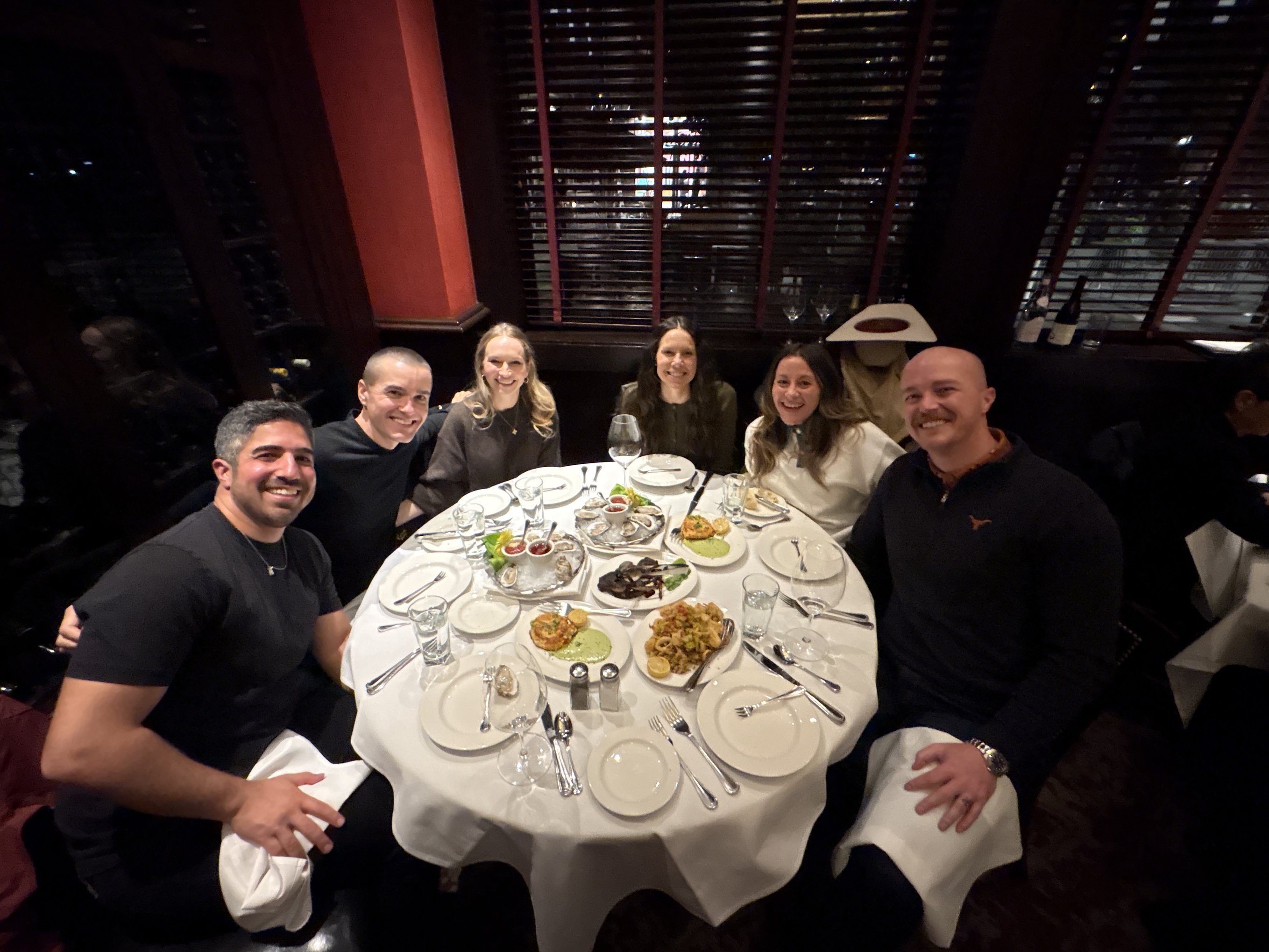
Earlier in the week, hedging on whether we'd actually close, I'd booked a dinner reservation at a steakhouse for Halloween night. I'd told a few friends I had an announcement to make but couldn't say what it was yet. The reservation was my own arbitrary deadline. I wanted to walk into that steakhouse on Halloween and tell the people I cared about that I'd sold the company.
That deadline did most of the work the rest of the week. Four law firms negotiating in real time. Buyer counsel reversing positions everyone thought were settled. Insurance underwriters running final diligence under deadline pressure. Shareholders being canvassed for written consent. Employees signing new employment agreements with their new owners. Spouses signing consent forms across multiple households.
By Thursday, the merger agreement was final. By Thursday evening, we had 90 percent shareholder approval. By Friday morning, the Delaware Certificate of Merger was executed by DocuSign across every required signature.
The wire hit at about 4:30 PM. The dinner reservation was at 7:00. Just enough time to confirm the money had cleared, take a shower, and get dressed.
Eighteen years and eight months after I'd put $2,500 into a bank account from a college dorm room, Tatango belonged to someone else.
Halloween night
The dinner was a strange combination of two emotions running at the same time.
The first was pure exhaustion. The last 30 days had been an unbroken stretch of ups and downs and pull-outs and getting back into the deal again. I was wrung out in a way I hadn't been since the early days of the company.
The second was celebration. The early investors who'd backed the company when it was just an idea had all made strong returns. Many of our employees received life-changing money that day. My bank account had grown significantly. So had a lot of other people's.
I woke up on Monday with no responsibility to a company I'd started 18 years earlier. No ownership. No holdback. No more decisions to make on its behalf.
It started with a conversation in January 2007 between a fraternity member and a sorority leader about her members not reading her emails. Eighteen years later, after the all-nighters with Matt and the air mattress, after my mother's paninis in the basement office, after a co-founder buyout that nearly ended the company before it started, after dentists and doctors and a $20,000 check my mother almost made me return, after the senator who turned a coupon platform into a political-fundraising machine, after a $50 million election year and a deliberate pivot away from it, after one Saturday-night ultimatum and one Halloween steakhouse reservation that ran the clock on a 95-day close, the whole thing was somebody else's now.
Their job to take it to the next level. Mine to figure out what came next.